The short version
Is How to Become a Parisian worth it?
Yes, if you fancy an easy hour of English-language comedy that teases the way Parisians behave, and you are happy to be part of a crowd rather than a connoisseur of stand-up. GetYourGuide shows 4.6 stars across 1,066 reviews, the booking page says the show has been seen by more than 800,000 people, and no French is needed. It suits you less if you want an edgy comedy-club night with a rotating bill, because this is one performer and one premise.
Six things to weigh up
A show built on one idea
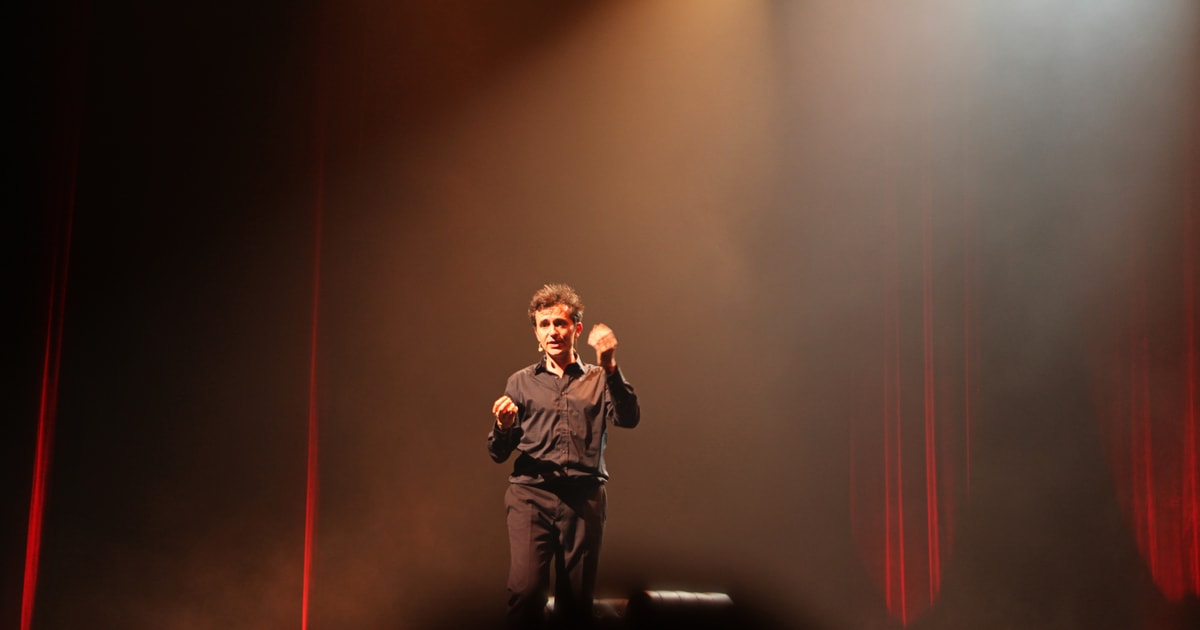
The booking page describes a one-man show about how Parisians think and behave: why the city has a reputation for rudeness, how to conduct yourself on the Métro and in shops, and a handful of French words and facial expressions that help you pass for a local. A Paris listings site calls it a comic lesson in passing as a Parisian, with imitations and offbeat advice.
Not a tour, not a language class
You sit in a theatre for about an hour and a quarter at most. There is no walking, no guide and no homework, and the French you pick up is seasoning rather than the point.
The audience it is made for
Visitors who have just met the city for the first time will recognise the situations. Residents and returning visitors can enjoy it too, though it is one fixed hour rather than a rotating bill.
Age and the bar
The booking page does not recommend the show under 16 and refuses children under 10. Food and drinks are sold at the theatre bar and are not part of the ticket.
Cloakroom and tips
The booking page says the cloakroom is compulsory for some items, and that the hostess works for tips. Both are small things to know before you arrive, and neither changes the ticket price.
Changing your mind
If plans shift, the ticket can be dropped without a fee up to a day beforehand, and the money is not taken until later. Whatever your own date shows in the calendar is what counts.
Seven things behind the joke
Seven things to know about the jokes and the street
The show jokes about real habits and a real address. Each card below condenses what Wikipedia, the tourism trade press and a French etiquette guide report on one of those threads.
-
The reputation
A rude city, or a hospitality problem?
In June 2013 the Paris Chamber of Commerce and the regional tourism committee launched a campaign called Do You Speak Touriste?, according to The Local. A manual went to 30,000 tourism professionals, with notes on what British and American visitors expect. The point was commercial: staff were being asked to understand visitors better, not told that visitors were wrong.
-
The syndrome
When Paris disappoints
Wikipedia says the Japanese psychiatrist Hiroaki Ota coined "Paris syndrome" in the 1980s and published a book of that title in 1991. It describes a severe form of culture shock, reported mainly among Japanese visitors, and it is not treated as an established diagnosis. A Japanese embassy spokesperson put the number of cases at about 20 a year in 2006, and one psychiatrist prefers the phrase "pathological travel".
-
The word
Say bonjour first
Expatica advises greeting shop staff when you enter and again when you leave, with bonjour on the way in and au revoir or merci on the way out, and adding Monsieur or Madame to a stranger's greeting. The Paris show builds its comedy on this kind of everyday ritual, and Sortiraparis says it covers greeting people in restaurants and riding the Métro.
-
The Métro
A system that opened in 1900
Wikipedia says the first Métro line opened on 19 July 1900, during the Paris World's Fair, without ceremony. Hector Guimard was commissioned on 12 January 1900 to design the station entrances; he called his work "Style Guimard" rather than Art Nouveau, and the canopy at Porte Dauphine is the only one still on its original site.
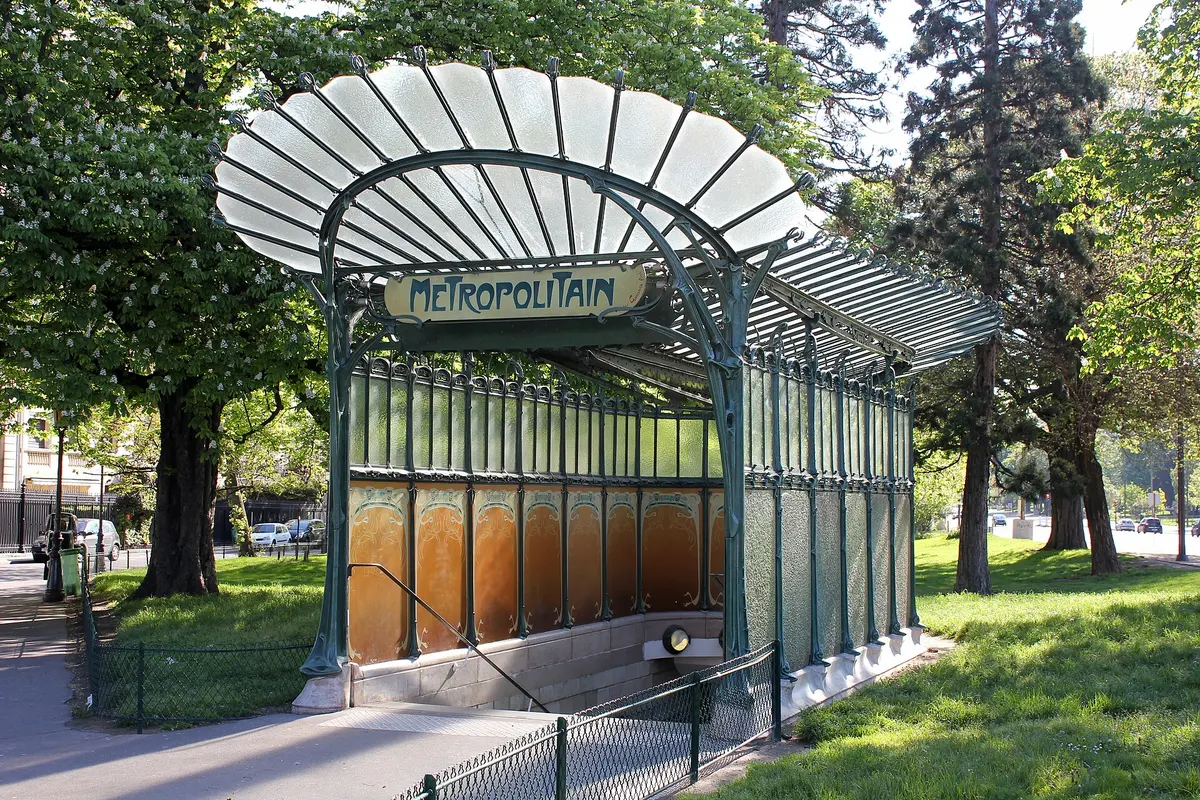
A Guimard Métro entrance at Porte Dauphine, the only one still on its original site, says Wikipedia. -
The boulevards
Walls turned into promenades
English Wikipedia traces the Grands Boulevards to a late-1660s plan under Louis XIV's minister Colbert, which replaced the demilitarised city walls with a ring of boulevards from 1670. Boulevard Poissonnière is one of eleven right-bank boulevards in the article's list, running between Boulevard de Bonne-Nouvelle and Boulevard Montmartre.
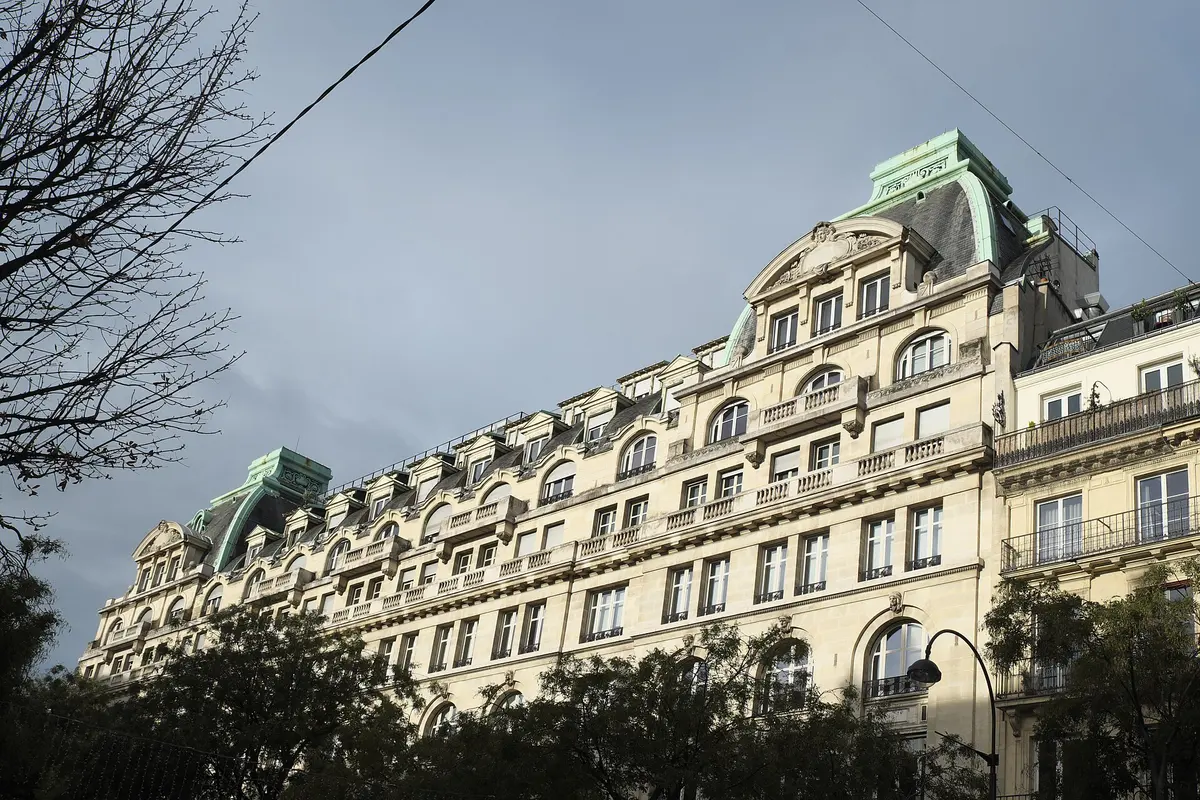
A corner of Boulevard Poissonnière, a 351-metre stretch of the Grands Boulevards. -
The crime boulevard
Theatre before the theatre district
Boulevard du Temple earned the nickname Boulevard du Crime for the crime melodramas staged in its many theatres, says Wikipedia. Daguerre's 1838 photograph of the street is considered the earliest surviving photograph to show a person, a man having his shoes shined who held still through an exposure of about four to five minutes.
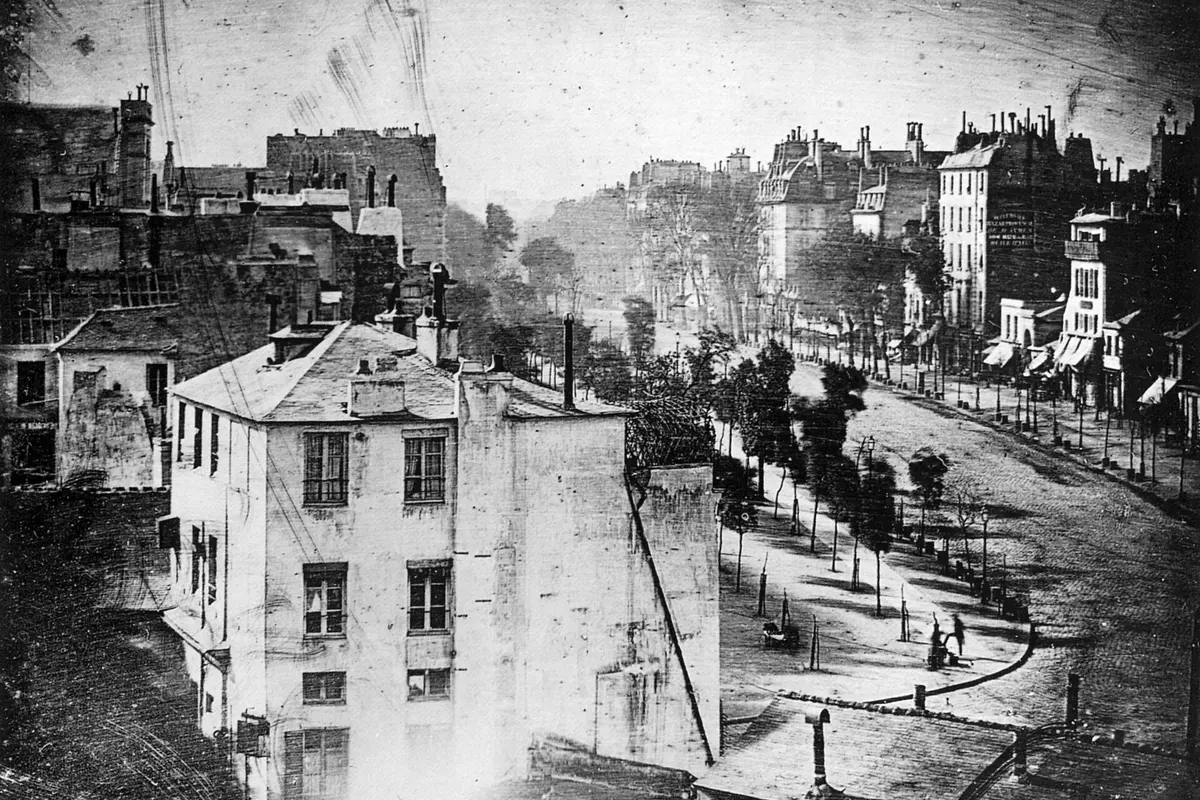
Daguerre's 1838 view of Boulevard du Temple, once nicknamed the Boulevard of Crime. -
The genre
Boulevard theatre
French Wikipedia describes théâtre de boulevard as a style that grew from the boulevards of old Paris, with bourgeois and popular theatres settling on Boulevard du Temple from the later decades of the 1700s. From the Second Empire on, the boulevard stages put on vaudevilles and comedies of intrigue, and the television programme Au théâtre ce soir aired plays from that repertoire from 1966 to 1985.
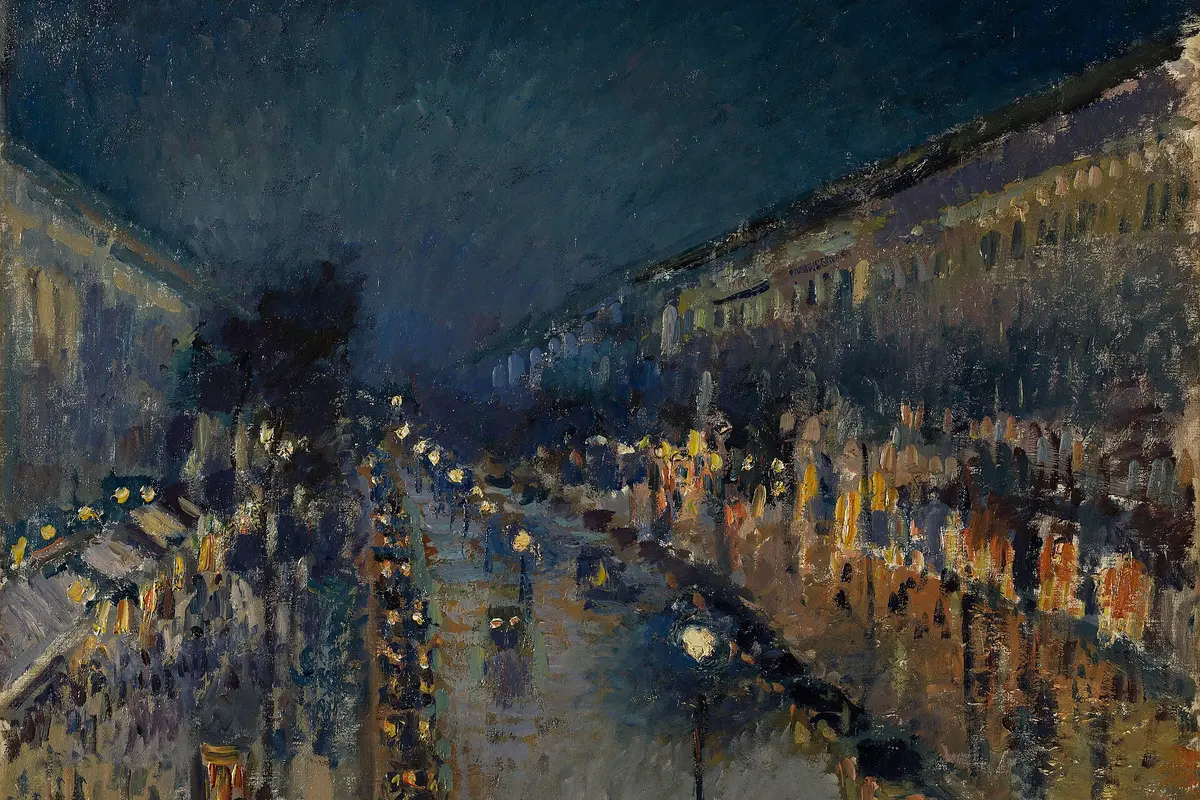
Pissarro's Boulevard Montmartre at Night, c. 1897, painted a few steps from Boulevard Poissonnière.
Sources: English and French Wikipedia on the Théâtre des Nouveautés, Boulevard Poissonnière, the Grands Boulevards, Boulevard du Temple, théâtre de boulevard, the Paris Métro and Hector Guimard; The Local on the 2013 tourism manual; Expatica on French greetings.
One boulevard, a century of stages
Boulevard Poissonnière in seven dates
- 1676
The street is formed by letters patent in July
In the record: Part of the ring of boulevards that replaced the city's old walls, according to Wikipedia
- 1826
A royal ordinance of 4 May fixes its width at 35 metres
In the record: It runs 351 metres between Boulevard de Bonne-Nouvelle and Boulevard Montmartre
- 1865
The café-restaurant Le Brébant is founded at number 32
In the record: Listed on French Wikipedia as founded that year
- 1894
Parisiana opens at number 27 as a café-concert
In the record: It later became a cinema and closed in 1987
- 1908
Léon Gaumont's first cinema hall opens at number 7
In the record: The Gaumont-Théâtre closed in 1977
- 1921
The Théâtre des Nouveautés opens at number 24
In the record: It opened with operettas and comedies, and the Max Linder Panorama cinema stands beside it
- 1932
Le Grand Rex opens at number 1
In the record: Its main hall seats more than 2,700, and it has been a monument historique since 1981
What the booking page lists
What the listing says, and what it leaves out
Six items drawn from the listing on 19 November 2026. Where the page says nothing, this page says nothing either, and your confirmation e-mail outranks everything here.
Check the calendar ↗The lowest ticket price found when this page was checked. Your own date in the calendar shows the exact amount in your currency.
- The show
- A comedy show in English titled How to Become a Parisian: a one-man hour on Parisian attitudes, Métro and shop manners, and French words and expressions.
- The performer
- Olivier Giraud, described by the Paris listings site Sortiraparis as a Parisian who moved from the hotel trade to the stage.
- The length
- Seventy to seventy-five minutes, says the booking page.
- The theatre
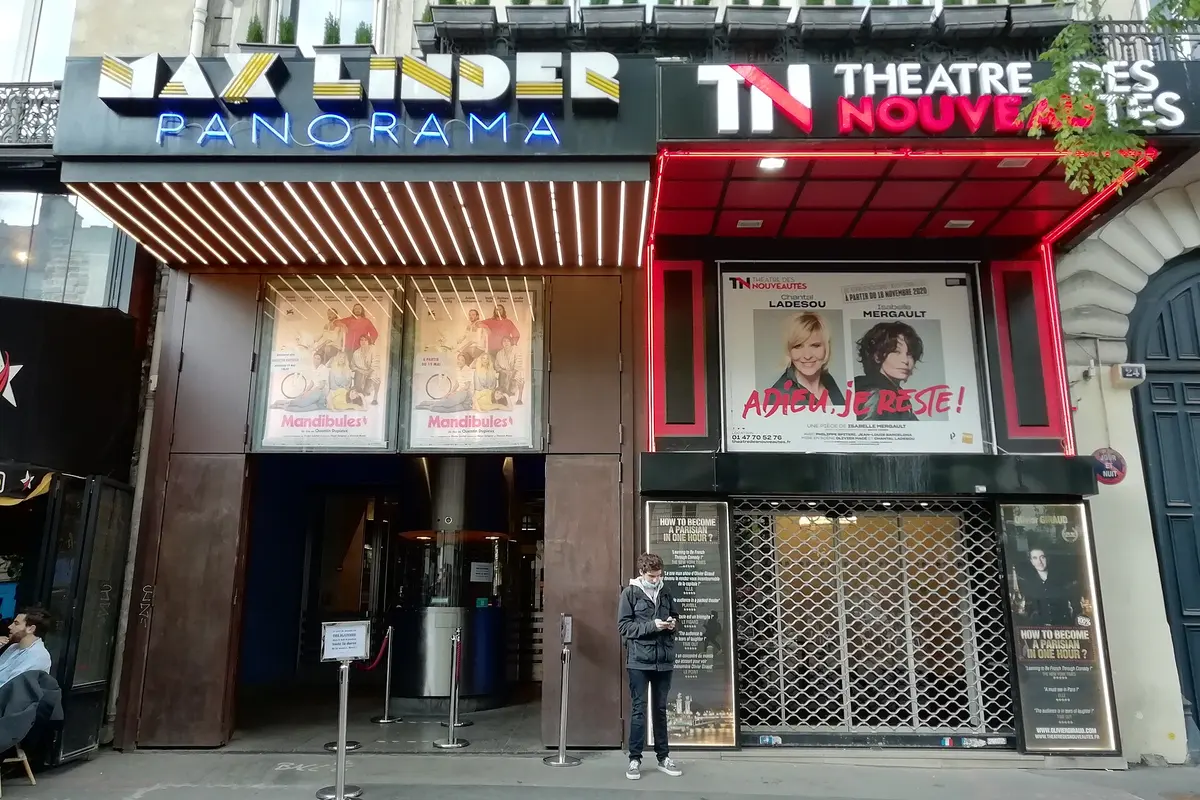
- The Théâtre des Nouveautés, 24 Boulevard Poissonnière, in the 9th arrondissement. The booking page calls it a century-old theatre; English and French Wikipedia date the building to 1921.
- The audience figure
- The listing says more than 800,000 people have seen the show, and elsewhere says nearly one million. This page uses the lower number and treats it as the listing's own claim.
- Booking terms
- You can cancel without charge until 24 hours out, and holding a seat does not require payment today. A photo with the comedian is offered.
Laughing in a theatre or gliding down the Seine
A Paris comedy night or an evening Seine cruise?
Book the laughs, then fill the other Paris days
Other Paris bookings to set beside it
The comedy hour takes one evening. Three other Paris bookings sit beside it: a lit-up river cruise as the obvious evening rival, a reserved-entry art museum for the daytime, and a guided tour of the restored cathedral.
- See dates ↗
How to Become a Parisian: English-language comedy show
A one-man comedy hour in English about how Parisians think and behave, played at the Théâtre des Nouveautés on Boulevard Poissonnière.
- See dates ↗
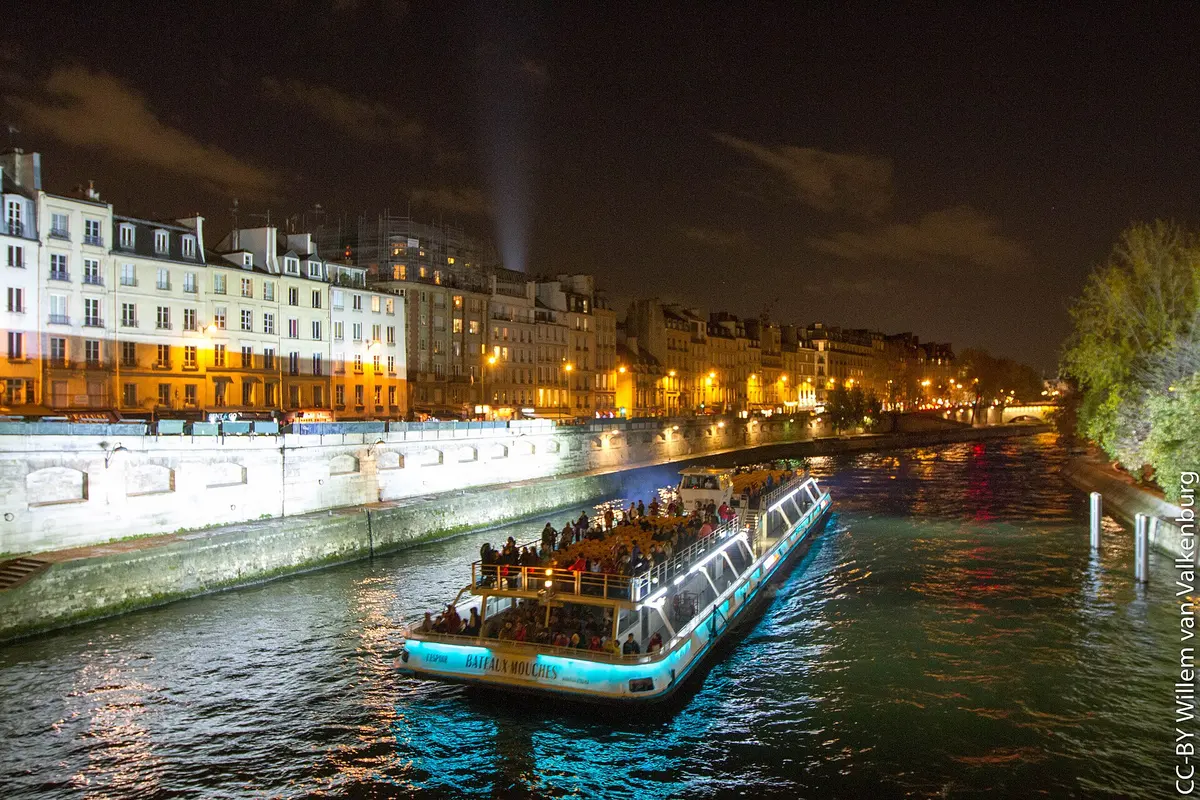
Evening lights cruise with Bateaux-Mouches
A sightseeing boat on the Seine after dark, going by its title. The natural rival for a Paris evening, and one that needs no English.
- See dates ↗
Musée de l'Orangerie reserved entry
A reserved-entry ticket for the Tuileries museum, going by its title. A daytime visit that leaves the evening free for the theatre.
- See dates ↗
Notre-Dame restored guided tour
A guided tour of the cathedral after its restoration, going by its title. Another daytime outing to pair with an evening show.
Also bookable in Paris
Settling the evening
Four things to settle before the night
Pick your date
Use the calendar to choose the evening that suits you. Your confirmation e-mail returns the date, the theatre and the start details, so there is no need to jot them down from this page.
Decide who is coming
The booking page does not recommend the show for anyone under 16 and refuses children under 10, so this is an evening for teenagers and adults.
Plan the bar and the cloakroom
The bar sells food and drinks, which the ticket does not cover. Some items must go in the cloakroom, so travel light if you can.
Look at the rest of the day
The show fills one evening. A reserved-entry museum visit or a guided cathedral tour fits the daytime, and the cruise on this page is the obvious alternative if you would rather watch the lights than hear the jokes.
The theatre, the boulevards and the Métro
The theatre, the boulevards and the Métro
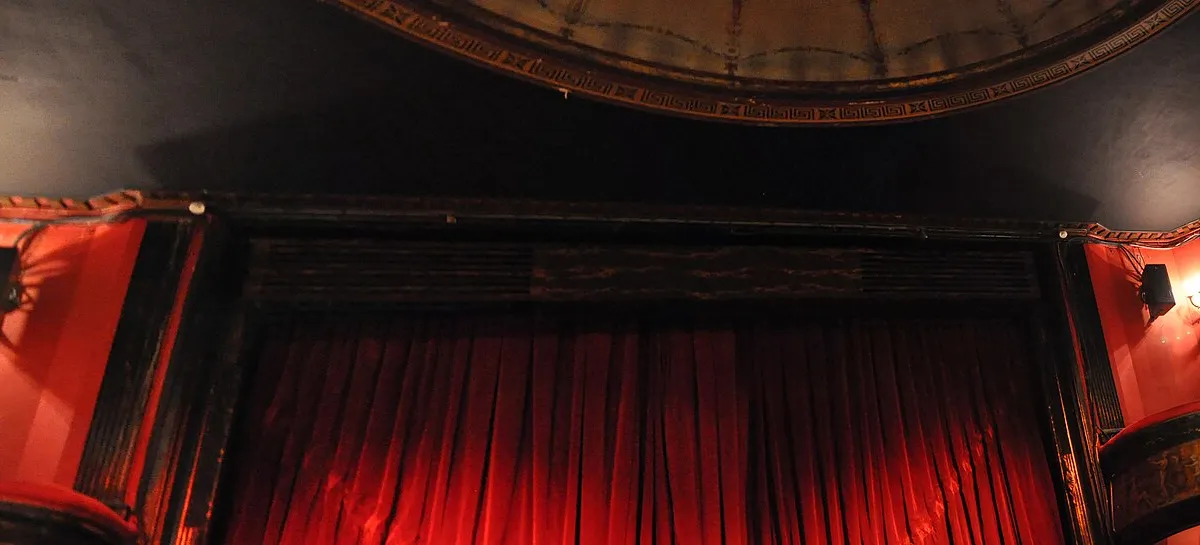
Real photographs from Wikimedia Commons: the red-and-gold interior of the Théâtre des Nouveautés, its street front, a corner of Boulevard Poissonnière, Daguerre's 1838 street view, Pissarro's night boulevard, a Guimard Métro entrance and a Seine sightseeing boat.
Six deeper reads
Six reads on the show, the street and the theatre
- Start here Is How to Become a Parisian worth it? What the 4.6 can and cannot tell you The English-language comedy hour at the Théâtre des Nouveautés in plain terms: who it suits, what it leaves out, and how to decide in five minutes. Read →
- The comparison A Paris comedy night or an evening Seine cruise? How to Become a Parisian against a Bateaux-Mouches lights cruise: two ways to spend a Paris evening, set side by side. Read →
- The reputation Are Parisians rude? The reputation, the bonjour rule and Paris syndrome The idea at the heart of the show, traced through a tourism campaign, a psychiatrist's term and a French etiquette guide. Read →
- The street Boulevard Poissonnière and the Grands Boulevards: a short history From city walls to promenades to theatres: the stretch of Paris where the show is staged. Read →
- The theatre A short history of the Théâtre des Nouveautés A name that has belonged to four Paris theatres, and the 1921 building where the comedy is staged today. Read →
- The practicalities How to plan a night at How to Become a Parisian Booking, age limits, the bar, the cloakroom, the tip jar and the Paris Métro, in one place. Read →
FAQ
Quick answers before you choose a date
Is How to Become a Parisian worth it?
For most first-time visitors, yes: GetYourGuide shows 4.6 stars across 1,066 reviews for an hour of English-language comedy about Paris manners. It is a single performer with one fixed premise, so it suits an easy evening better than a hunt for fresh stand-up.
Is the show in English, and do I need French?
It is in English, and Sortiraparis describes it as entirely in English. The booking page says you pick up some French words and facial expressions, but none is needed to follow it.
How long does it last?
Seventy to seventy-five minutes, according to the booking page.
Where is the theatre?
At 24 Boulevard Poissonnière, in the 9th arrondissement, on a stretch of the Grands Boulevards. French Wikipedia lists the Grands Boulevards and Bonne-Nouvelle stations among those serving the boulevard; your confirmation e-mail repeats the address.
Can children go?
The booking page does not recommend the show under 16 and refuses children under 10.
Can I cancel?
Yes. The cut-off for dropping the ticket without a fee is a day before the start, and payment is not due when you reserve. Your own date in the calendar shows the exact terms.
Is food or drink included?
No. Food and drinks are sold at the theatre bar and are not part of the ticket.
What is the cloakroom about?
The booking page says the cloakroom is compulsory for some items, so leave bulky things at your hotel if you can.
Do I tip the hostess?
The booking page says the hostess works for tips. It is a custom of the house, not part of your ticket price.
Is it better than an evening cruise on the Seine?
They do different jobs: the show is indoors, in English and built on jokes, while a Bateaux-Mouches cruise is about the river and the lights. The comparison read on this site sets them side by side.